Organic Short-Form Growth With Zero Ad Spend: What Actually Works in 2026
You do not need a paid budget to grow through short-form content. You need a system. Here is what actually drives organic growth in 2026, and what used to work but no longer does.

Sarah Adams
10 July 2026 · 7 min read
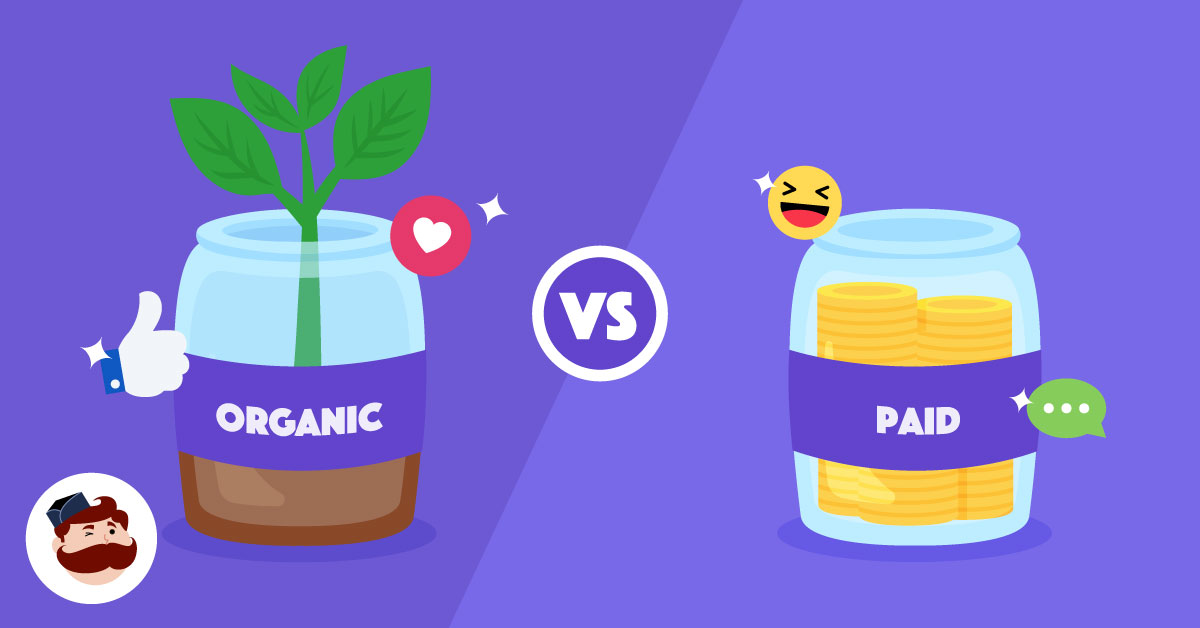
Every quarter, something that used to work in short-form content stops working. Every quarter, something new emerges that most brands have not figured out yet. This is not a guide to hacks. This is a framework for understanding how platforms distribute content organically, and how to build a brand on that foundation without spending anything on ads.
We have run organic short-form content for brands across finance, health, beauty, and lifestyle. We have seen what compounds and what fades. Here is the honest version.
How distribution actually works
Before tactics, you need to understand the mechanism.
Short-form algorithms do not distribute your content to your followers first. They distribute it to a small test cohort, typically a few hundred accounts with similar interests to the profiles that have engaged with content like yours in the past. The algorithm measures how that cohort responds: specifically, it looks at watch time, completion rate, shares, and profile visits.
If the test cohort responds well, the content goes to a larger cohort. Then a larger one. This is why a video from an account with 300 followers can get a million views. Follower count does not gate distribution.
This has a critical implication for brands: the thing that drives growth is content quality, not account authority. An established account does not get a free pass. A brand-new account with genuinely compelling content can outperform a blue-chip brand's polished production.
The three metrics that determine distribution more than any others:
- Completion rate: what percentage of viewers watch to the end, or watch it more than once
- Shares: shares to DMs are the most powerful signal. They indicate the viewer found the content so valuable or resonant they wanted to send it to someone specific
- Profile visits after watching: this tells the algorithm the viewer found the creator interesting enough to want to see more
What actually drives organic growth in 2026
Volume over polish
This has been true for three years and it is still the most underused insight among brands. Brands that post three times a week and obsess over production quality consistently underperform brands that post five to seven times a week with simpler, faster content.
The algorithm needs data. Posting twice a week gives you 104 data points a year. Posting daily gives you 365. With more data, you find your winning formats faster. With faster discovery, you compound quicker.
The sweet spot in 2026 is five posts per week minimum for a brand trying to grow from scratch, with a mix of formats: one or two higher-effort videos and three or four lower-effort ones.
The first three seconds determine everything
The algorithm tracks when viewers drop off. If a video loses more than 30 percent of its audience in the first three seconds, it rarely gets pushed further.
The hook is the highest-leverage element of any piece of content. A great hook on a mediocre video will outperform a mediocre hook on a great video, every time.
What makes a great hook in 2026:
- A counter-intuitive statement: something that contradicts what the viewer expects to hear
- A direct address: "If you are doing X, stop." Creates immediate personal relevance
- Visible tension: something unresolved that the viewer needs to see resolved
- A number or specific claim: concrete beats vague, every single time
Native formats outperform produced content
This is the insight most brands resist. Content that looks like it was made using the platform's own tools, with text overlays, camera movements native to phone recording, conversational delivery, consistently outperforms highly produced content.
This is algorithmic, not just aesthetic. Algorithms have learned to associate native-looking content with organic creator posts, which historically perform well. Highly produced content reads as an ad, and viewers have been conditioned to skip ads before they even register what is being advertised.
The brands that break through in short-form usually do so by looking like creators, not corporations.
- Casual camera setups, phone rather than cinema camera
- Direct-to-camera talking, not scripted spokesperson delivery
- Imperfect framing, natural lighting
- Platform-native text and caption styles
Comments are an underrated growth lever
Comment velocity is treated by algorithms as a signal of content quality. More importantly, the nature of the comments matters.
Content that provokes genuine questions or debate signals to the algorithm that viewers are engaged enough to invest effort. Comments that require the viewer to actually think are a stronger signal than simple reactions.
Brands can actively seed this by asking questions in captions, ending videos with a debatable claim, and responding to early comments in a way that extends the conversation.
Reply videos, creating content directly in response to a comment, are still one of the most effective growth tactics available. They show existing viewers their engagement was valued, and they give you pre-validated content topics. The comment tells you exactly what the audience wants to know more about.
Consistency at the account level builds long-term distribution
Accounts that post consistently, same subject matter, same rough format, same cadence, build a profile that the algorithm can categorise accurately.
When the algorithm knows what your account is about, it gets better at showing your content to the right people. An account that chases trending topics outside its niche is harder to categorise, which means its content gets distributed to less relevant cohorts, which depresses watch time, which depresses reach.
Brands that chase trending sounds or topics outside their niche see a temporary spike followed by a worse-than-before baseline. The algorithm learned about your account from that content, and now it is confused.
What used to work but no longer does
Using trending sounds for organic reach
Trending sounds drove organic reach in 2022 and early 2023. The algorithm no longer weights sounds heavily for discovery. It has shifted to content quality signals: watch time, completion, shares. Using a trending sound with poor content does not help. Using an obscure sound with great content still distributes well.
Giveaway follows
Giveaway-driven follower growth produces accounts with high follower counts and terrible engagement rates. The algorithm tracks the ratio of followers to engaged viewers, and an account with 100,000 giveaway followers that gets 500 views per video is actively penalised. The signal is that the content is not relevant to the audience.
Growing followers through giveaways makes your account look bigger and perform worse. It is not worth it.
Posting at "peak times"
The "best time to post" advice is not relevant. Short-form algorithms distribute content based on engagement signals, not post timing. A video posted at 3am that gets strong completion rate in its first cohort will still be pushed. The only time when posting hour matters is if you are trying to capture a real-time event, and even then, the distribution advantage is small.
Building the compounding system
The brands that succeed with organic short-form are not the ones that make one great video. They are the ones that build a system that produces consistent content, learns from what works, and improves over time.
The system has four components:
- Iteration tracking: weekly review of what performed above and below baseline, with a hypothesis about why
- Format library: catalogue of proven formats that can be recreated with fresh content
- Volume discipline: non-negotiable posting frequency even in periods of low performance. The algorithm needs data
This is not glamorous. It is also what works.
If you want to know how this system would apply to your specific brand, book a call. We will look at your category, your existing content, and your audience, and tell you exactly what we would test first.
Sarah Adams
Creative Strategist @ The Social Vision
Sarah leads creative strategy at The Social Vision, turning brand briefs into organic content engines. She has developed the street interview and platform-native formats behind some of our highest-performing campaigns.